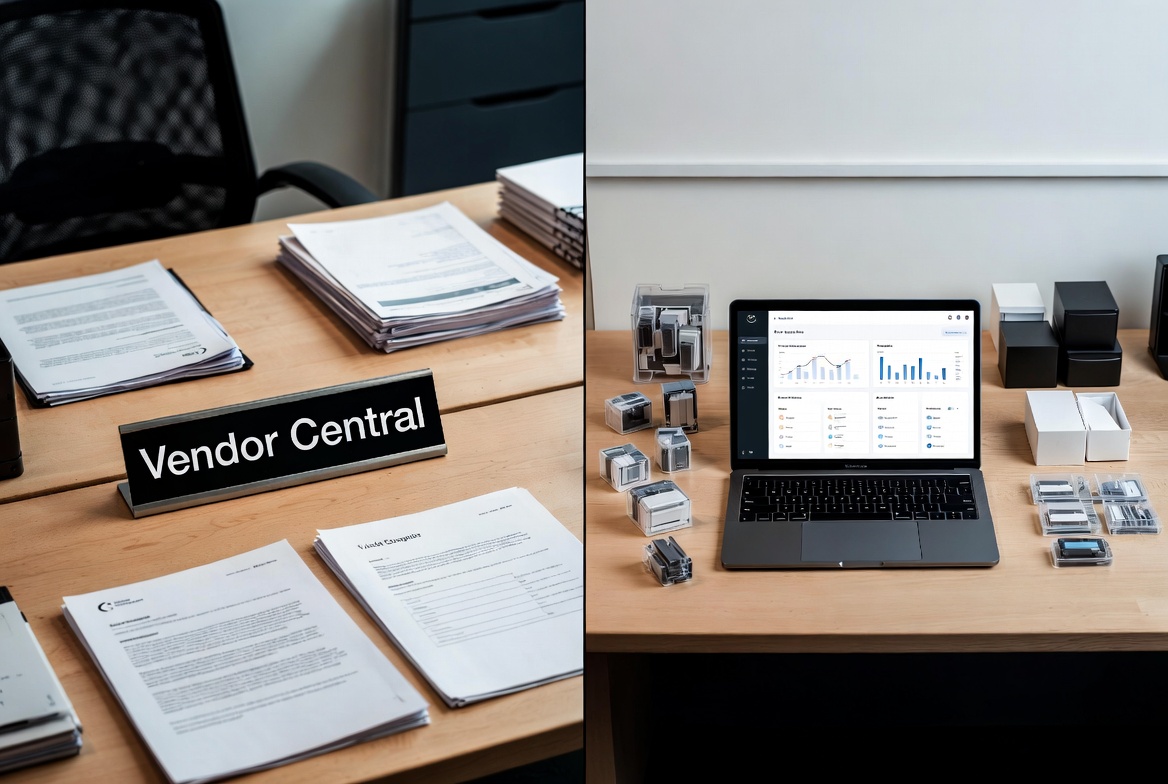
Most Amazon brand conversations still boil down to a binary choice: sell wholesale to Amazon through Vendor Central (often called 1P) or sell as a third-party seller through Seller Central (3P). Both can work — but they optimize for different outcomes, and many teams pick one without fully understanding the trade-offs.
This article breaks down how the models differ in day-to-day control, cash flow, data, and growth. If you're weighing a move between them — or looking for something that blends the best of both — you'll also want our overview of 2P selling on Amazon.
Vendor Central: Amazon as Your Customer
Under a traditional Vendor relationship, Amazon issues purchase orders. You ship to Amazon's warehouses, Amazon sets retail pricing within its systems, and you invoice Amazon wholesale. The upside is simplicity at the top line: you're not managing individual consumer orders or Seller Central case queues for every fulfillment hiccup.
The trade-off is leverage. Amazon controls retail price in practice more often than brands expect, chargebacks and shortages can erode margin, and negotiation cycles (including annual vendor terms) can feel opaque. You also get a different slice of retail analytics than most 3P dashboards — useful, but not always interchangeable with what operators need for full-funnel optimization.
Seller Central: You Own the Listing — and the Workload
Seller Central puts your brand in the driver's seat for catalog, pricing strategy (within Amazon's rules), inventory, and advertising — if you invest the time and systems to run it well. You capture retail margin instead of wholesale margin, and you can move faster on listing tests, promos, and retail readiness.
That freedom comes with operational load: FBA inbound planning, PPC, brand protection, and constant policy changes. Many brands hit a ceiling where the channel is "working" but internal bandwidth is the bottleneck — a pattern we outline in five signs you've outgrown DIY Seller Central.
Cash Flow and Margin: The Quiet Difference
Vendors often wait on payment terms while Amazon sells through inventory. Sellers manage cash tied up in FBA stock and ads, but can sometimes align spend more tightly to contribution margin goals. Neither is automatically "better" — the right answer depends on your balance sheet, category, and how disciplined your retail math is.
Control, Brand Protection, and the Buy Box
Unauthorized sellers and pricing pressure show up in both models, but the playbook differs. On Seller Central, Buy Box ownership and Buy Box strategy are explicit levers. On Vendor, the levers are often commercial — terms, supply, and how tightly Amazon retail pricing aligns with your MAP and channel policy.
Where 2P (Buy-Sell) Fits
The 2P model is a wholesale buy-sell partnership: your partner purchases inventory, operates the channel with full accountability, and aligns economics through margin instead of disconnected fees. For many mid-market brands, it's a way to get operator-grade execution without turning Amazon into a second company inside your company.
If you're comparing partners, not just platforms, read what to look for in an Amazon partner and agency vs. accelerator vs. buy-sell.